
You have 0 items in your cart
A cluster headache and a migraine are two separate headache disorders. Cluster headaches cause short, severe attacks on one side of the head, often at the same time each day. Migraines last longer, build more slowly, and often bring nausea and sensitivity to light.
The differences matter because each one is treated differently. This guide compares them side by side. Only a doctor can diagnose which one you have.
Oxygen for Cluster Headaches in Los Angeles
Wishing Well Medical supplies oxygen for cluster headaches with a valid prescription. We also refill and exchange oxygen tanks at our West Los Angeles showroom. Call (310) 829-1777 or see our Cluster Headache Oxygen Kit.
What Is a Cluster Headache?
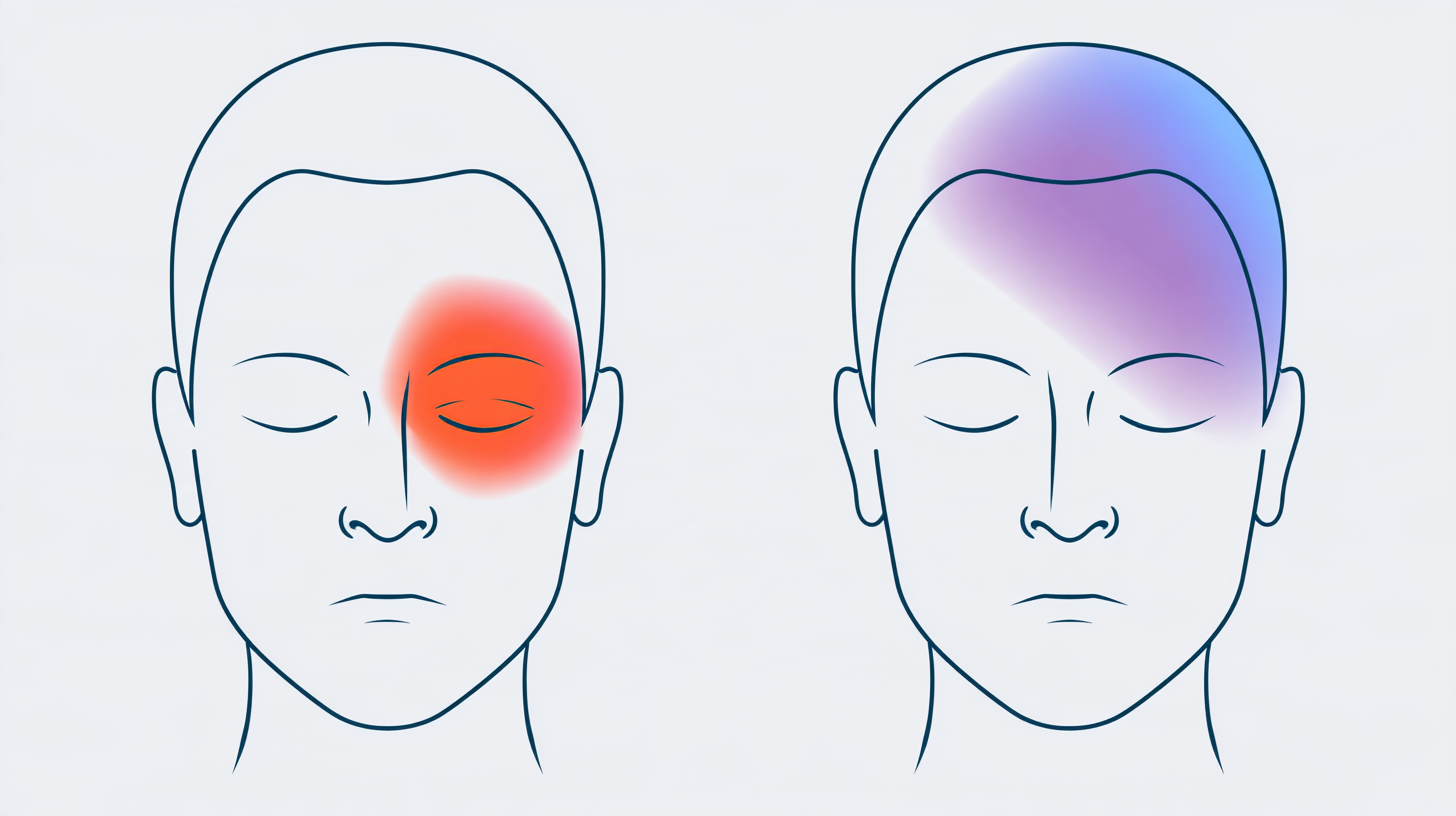
A cluster headache is a primary headache disorder that causes severe pain on one side of the head, around the eye or temple. Untreated attacks last 15 to 180 minutes. They come in groups, called cluster periods, that can last weeks or months.
The International Classification of Headache Disorders (ICHD-3) defines a cluster attack by these features:
- Location: one side only, around or above the eye, or at the temple
- Length: 15 to 180 minutes when untreated
- Frequency: from one attack every other day up to eight attacks a day
- Same-side signs: a red or watery eye, a stuffy or runny nostril, a drooping eyelid, or a sweaty forehead
- Behavior: restlessness or agitation during the attack
Cluster headache is rare. It affects about 0.1% of people, or roughly 1 in 1,000. It is more common in men, and it usually starts between ages 20 and 40.
What Is a Migraine?
A migraine is a primary headache disorder with attacks that last 4 to 72 hours when untreated. The pain is often on one side and throbbing, and it gets worse with routine activity like walking or climbing stairs. Nausea, vomiting, or sensitivity to light and sound often come with it.
Some people also get an aura before the pain starts. An aura is a short, fully reversible change in vision, sensation, or speech, such as flashing lights or tingling. Migraine is far more common than cluster headache. It affects about 15% of people.
Cluster Headache vs. Migraine: Key Differences
The clearest differences are attack length, timing, and how a person acts during an attack. Cluster attacks are shorter and come in daily runs. Migraine attacks last for hours or days.
| Feature | Cluster headache | Migraine |
|---|---|---|
| Pain location | One side, around the eye or temple | Often one side; can be both |
| Pain quality | Severe to very severe | Throbbing, moderate to severe |
| Attack length (untreated) | 15 to 180 minutes | 4 to 72 hours |
| How often | Every other day up to 8 a day, often at the same time | Varies; attacks are separate events |
| Pattern | Cluster periods of weeks or months, then remission | No cluster periods |
| Sleep | Attacks often wake people from sleep | Attacks rarely interrupt sleep |
| During an attack | Restless, pacing, unable to sit still | Activity makes it worse; people often lie still |
| Same-side signs | Watery or red eye, runny nostril, drooping eyelid | Not typical |
| Other symptoms | Not the main features | Nausea, vomiting, light and sound sensitivity, sometimes aura |
| Who it affects most | Men; onset usually ages 20 to 40 | Women |
| How common | About 0.1% of people | About 15% of people |
How Long Do Cluster Headaches Last?
A single cluster headache attack lasts 15 to 180 minutes when untreated. The attacks repeat during a cluster period. Under ICHD-3, a cluster period lasts from 7 days to 1 year.
How long the periods last, and how long the breaks between them last, decides the type:
- Episodic cluster headache: at least two cluster periods of 7 days to 1 year, separated by pain-free breaks of 3 months or more. Most people with cluster headache have this type.
- Chronic cluster headache: attacks for at least 1 year with no break, or with breaks shorter than 3 months.
A person can move from one type to the other over time.
Is a Cluster Headache a Type of Migraine?
A cluster headache is not a type of migraine. ICHD-3 lists them as two separate primary headache disorders, each with its own diagnostic criteria. Cluster headache belongs to a group called trigeminal autonomic cephalalgias.
Researchers still debate how closely the two are related, because they share some features. Some people have both conditions. A doctor can tell them apart from the attack pattern.
Tension Headache vs. Migraine vs. Cluster Headache
A tension-type headache is the mildest of the three. It feels like pressure or tightening on both sides of the head. It lasts 30 minutes to 7 days, and routine activity does not make it worse.
| Tension-type | Migraine | Cluster | |
|---|---|---|---|
| Side | Both sides | Often one side | One side only |
| Feel | Pressing or tight | Throbbing | Severe, around the eye |
| Length (untreated) | 30 minutes to 7 days | 4 to 72 hours | 15 to 180 minutes |
| Intensity | Mild to moderate | Moderate to severe | Severe to very severe |
| Activity | No effect | Makes it worse | Restless, pacing |
| Nausea | No | Often | Not a main feature |
How Cluster Headaches and Migraines Are Treated
Cluster headaches and migraines are treated differently, so the right diagnosis comes first. A doctor or headache specialist diagnoses both and decides the treatment plan.
- Cluster headache: the American Academy of Family Physicians reports that evidence supports inhaled oxygen, sumatriptan, and zolmitriptan for stopping an attack. Preventive medicine is used to cut down attacks during a cluster period.
- Migraine: treatment includes medicine taken at the start of an attack and, for frequent attacks, preventive medicine.
Home oxygen for cluster headaches requires a prescription. Wishing Well Medical in West Los Angeles supplies oxygen for cluster headaches to customers with a valid prescription. Call (310) 829-1777 with questions.
A sudden, severe headache unlike any you have had before needs emergency care. Call 911.
Frequently Asked Questions
Which is worse, a migraine or a cluster headache?
A cluster headache is usually more intense than a migraine, but shorter. Headache researchers rank cluster headache among the most severely disabling headache disorders. Cluster attacks last 15 to 180 minutes, while a migraine can last up to 72 hours. Both conditions can seriously disrupt work, sleep, and daily life.
How can you tell a migraine from a cluster headache?
A migraine and a cluster headache differ most in attack length and behavior during an attack. Cluster attacks last 15 to 180 minutes, often strike at the same time each day, and make people restless. Migraine attacks last 4 to 72 hours and get worse with movement. Only a doctor can confirm the diagnosis.
What can be mistaken for a cluster headache?
Cluster headache is often mistaken for migraine, sinus problems, or dental pain. Other one-sided headache disorders, such as paroxysmal hemicrania and trigeminal neuralgia, can look similar. In one study, patients waited an average of more than 9 years for a correct diagnosis. A neurologist or headache specialist can identify the cause.
Can you have both migraines and cluster headaches?
A person can have both migraines and cluster headaches. ICHD-3 classifies them as separate disorders, but some people experience both, and their features can overlap. Tracking attack length, timing, and symptoms in a headache diary helps a doctor tell which attacks are which.
Sources:
- Cluster Headache — American Academy of Family Physicians
- Debate: Are cluster headache and migraine distinct headache disorders? — PMC
- Variability of cluster headache phenotype, ICHD-3 criteria (n=825) — Pain and Therapy
- Clinical features of cluster headache in Taiwan — PMC
- ICHD criteria for migraine and tension-type headache — Cureus