You have 0 items in your cart

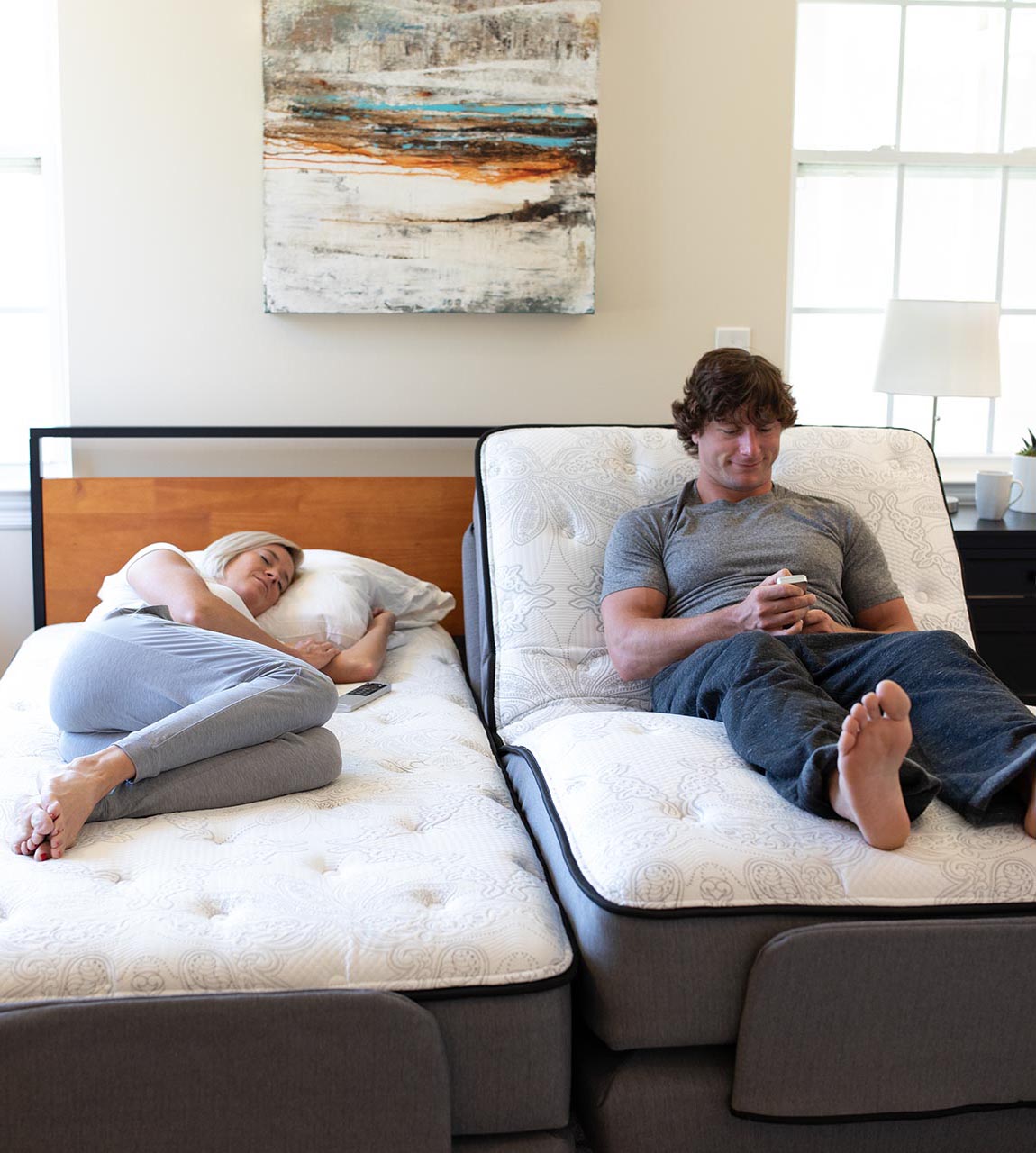
A hospital bed is a medical-grade adjustable bed with side rails, height adjustment, and a frame built for patient care and transfers. An adjustable bed is a comfort-focused bed that raises the head and foot to relieve pressure and improve sleep, designed to look and feel like standard bedroom furniture. The right choice depends on whether the primary need is medical support or everyday sleep comfort.
Both beds adjust position, but they serve different needs. This guide covers the key differences between a home hospital bed and an adjustable bed, the types of each, when each one makes sense, and how to weigh cost and rental options before you decide.
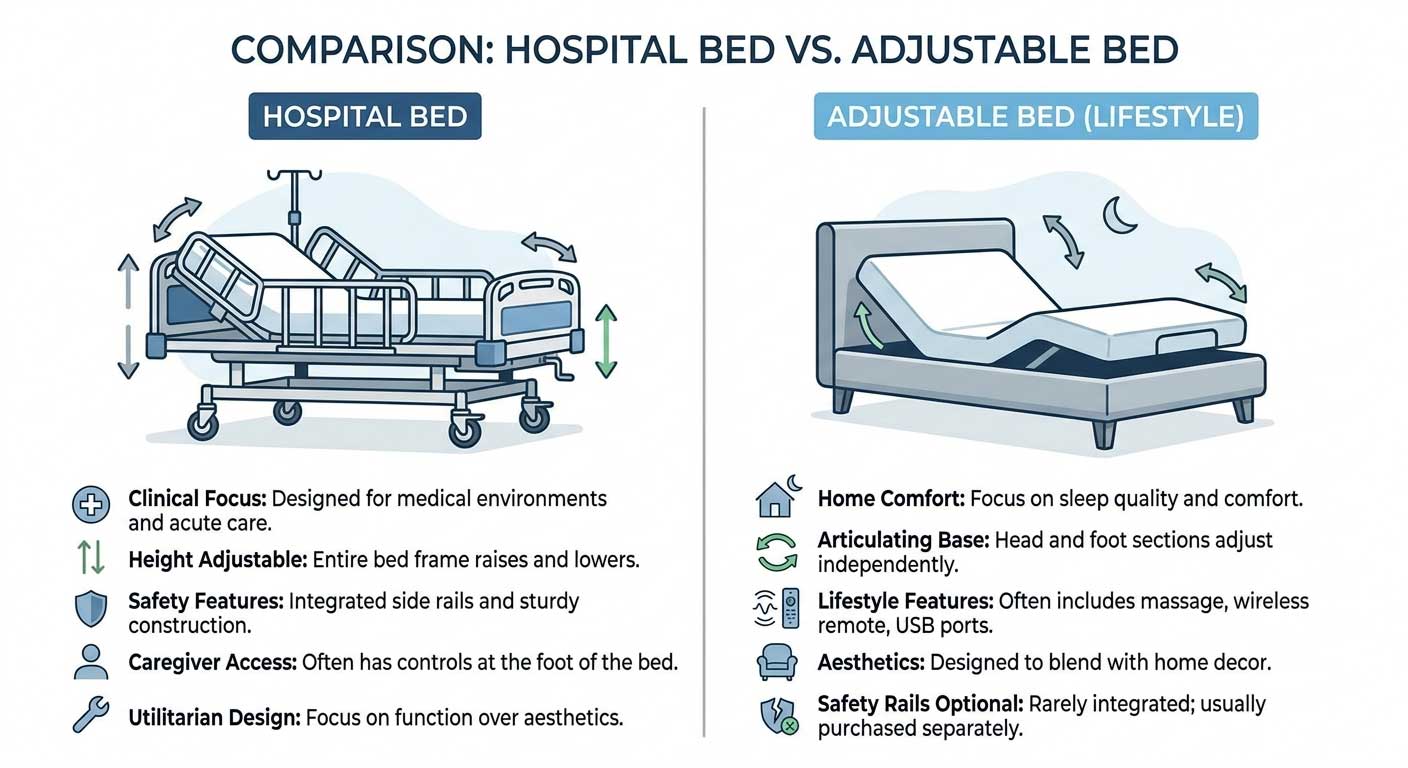
The core difference is purpose. A hospital bed is engineered for medical care — it adjusts height for safe transfers, includes side rails for fall prevention, and supports caregiving tasks. An adjustable bed is engineered for comfort — it elevates the head and foot to relieve pressure, improve sleep posture, and support overall well-being, while fitting into a normal bedroom.
| Feature | Hospital Bed | Adjustable Bed |
|---|---|---|
| Primary purpose | Medical care and recovery | Comfort and everyday sleep |
| Head elevation | Yes | Yes |
| Foot elevation | Yes | Yes |
| Height adjustment (hi-lo) | Yes, for transfers and care | No, fixed height |
| Side rails | Yes | Optional add-on |
| Appearance | Institutional look | Standard bedroom furniture |
| Fits existing bed frame | Sometimes | Usually |
| Mattress options | Pressure-relief specialty mattress | Memory foam and standard mattress |
| Typical user | Patients, recovery, caregiving | Comfort seekers, seniors, chronic pain |
| Weight capacity | Standard and bariatric | Standard and heavy-duty |
A hospital bed prioritizes function, safety, and caregiver access. An adjustable bed prioritizes sleep comfort and appearance while still delivering head and foot elevation.
A home hospital bed is a medical bed designed for use outside a medical facility, giving patients adjustable positioning and safe support at home. Home hospital beds are FDA-regulated Class II medical devices built to meet IEC 60601-2-52 safety standards for fall prevention, entrapment risk, and patient stability.
Home hospital beds come in several types based on how they adjust.
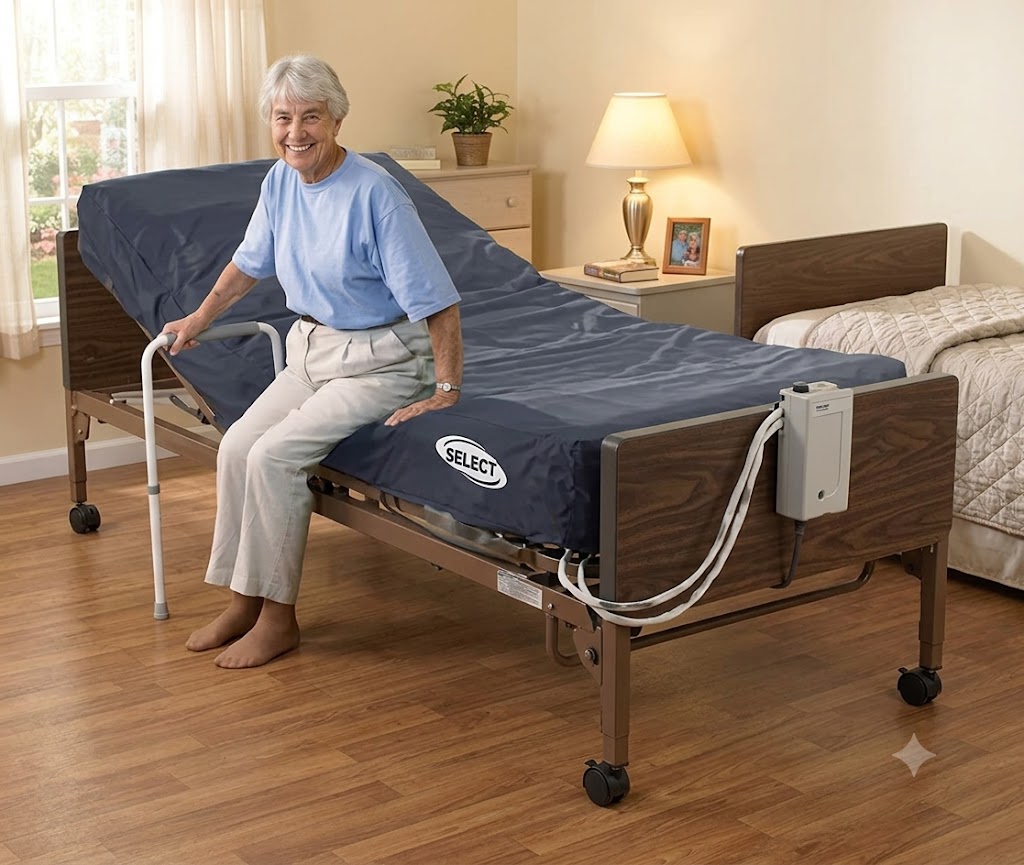
Manual hospital beds use hand cranks to raise the head, foot, and bed height. They cost the least but require physical effort from a caregiver, making them best for situations with reliable hands-on help.
Semi-electric hospital beds adjust the head and foot electrically while the bed height is set manually. They balance cost and convenience for home use.
Full-electric hospital beds adjust head, foot, and height electrically from a handheld control. Many full-electric hospital beds lower to around 10 inches to reduce fall risk and raise to around 39 inches for caregiver access, giving an adjustable height range of roughly 10 to 39 inches.
Bariatric hospital beds use reinforced frames and wider sleeping surfaces to support higher weight capacities. They deliver the same positioning and safety features as standard electric hospital beds for larger patients.
Hospital beds also support clinical positioning like Trendelenburg and reverse Trendelenburg — full body tilt used for circulation and specific medical conditions. Specialty pressure-relief mattresses pair with hospital beds to reduce pressure ulcers and skin breakdown in patients with limited mobility.
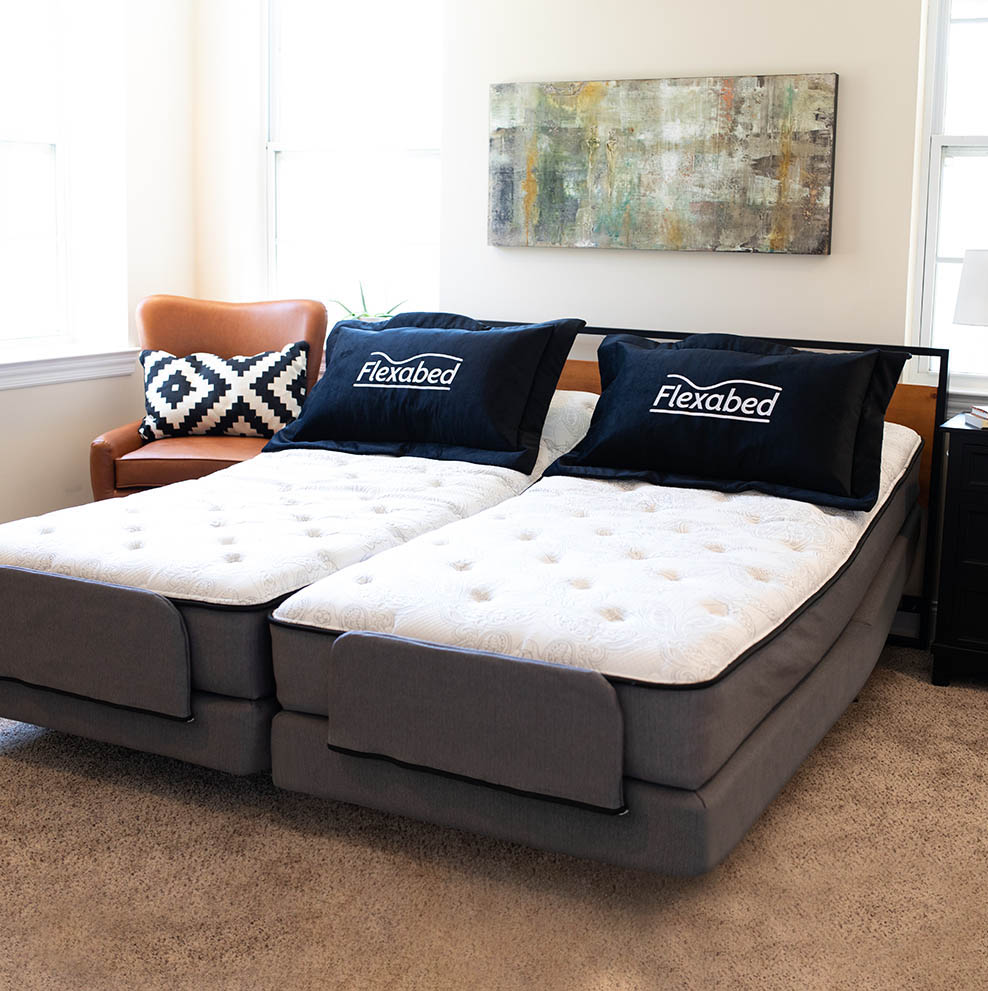
An adjustable bed is a bed with a motorized adjustable base that raises the head and foot sections independently for comfort and better sleep. Adjustable beds fit standard bedroom setups, work with most existing bed frames, and avoid the institutional look of medical equipment.
Most adjustable beds pair with a memory foam mattress and offer head elevation, foot elevation, and sometimes full-body positioning. Adjustable beds offer benefits beyond sleep — many models add massage, wireless remotes, and custom sizing.
Adjustable beds benefit anyone seeking better sleep posture and comfort, not only people with medical needs. Common reasons include acid reflux, poor circulation, chronic pain, back pain, and sleep apnea. Better sleep posture supports overall health, mental health, cognitive function, and general well-being. Many buyers are seniors seeking comfort and independence; others simply want a better sleeping surface than a standard bed on a box spring.
Choose a home hospital bed if the primary need is medical: recovery from surgery or injury, mobility limitations that require frequent repositioning, safe transfers in and out of bed, side rails for fall risk, or caregiver access at an adjustable bed height. A low bed height also reduces injury risk for patients at risk of falls, while a raised height reduces caregiver strain.
Choose an adjustable bed if the primary need is comfort: relief from reflux, circulation issues, or chronic pain, better sleep posture, or a bed that delivers head and foot elevation without an institutional look. Adjustable beds serve both medical comfort and everyday preference.
When the situation involves active patient care, mobility issues, or a higher risk of skin breakdown, the hospital bed is the safer, more functional choice. When it involves sleep comfort, aesthetics, and a normal bedroom feel, the adjustable bed fits better. Some people move from a hospital bed to an adjustable bed as they recover and their health issues stabilize.
Hospital beds and adjustable beds can both be rented or purchased, which affects the total cost. Hospital beds cost between $500 and $10,000 or more, depending on type, from basic manual models to fully electric and bariatric beds. Adjustable beds range from around $400 to $3,500 or more, depending on mattress options and features.
Renting a hospital bed makes sense for short-term recovery or temporary needs, while buying makes sense for long-term or permanent use. Adjustable beds are more often purchased as a lasting comfort investment, though adjustable bed rentals are available.
Medicare Part B may cover a home hospital bed as durable medical equipment when a doctor prescribes it as medically necessary, purchased through a Medicare-enrolled supplier. Adjustable beds are generally considered personal expenses and are not covered. Wishing Well Medical does not bill insurance, so customers pay directly and may submit receipts to their provider for possible reimbursement.